
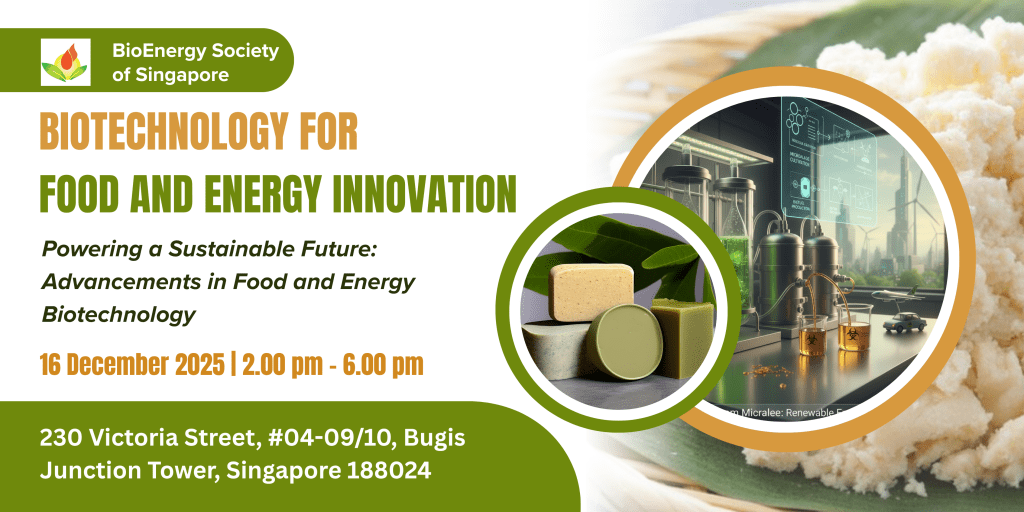
The Biotechnology for Food and Energy Innovation
The world faces the dual, interconnected challenges of ensuring food security for a growing population and rapidly achieving a sustainable energy transition. Biotechnology, with its unprecedented precision and speed, is the essential key to solving both.
This half-day symposium will provide a deep dive into how cutting-edge biotech tools—including synthetic biology, precision fermentation, and advanced genetic engineering—are driving innovation across these two critical sectors, paving the way for a truly circular bioeconomy.
Join leading researchers, industry pioneers, and policymakers to explore the convergence of these fields and discover how we can secure our food supply and accelerate the global energy transition simultaneously.
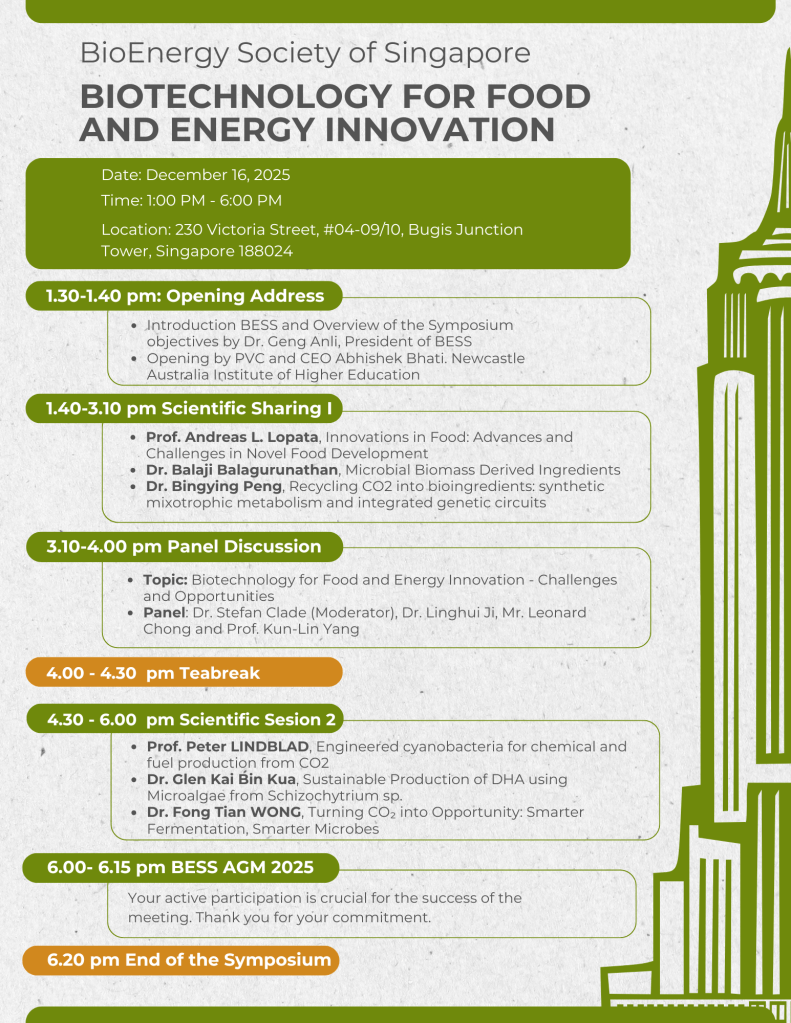
Agenda
Full Symosium Proceedings
Full proceedings can be found HERE. All abstracts and speakers’ biography are included.
Discussion Panel

Speakers

Prof. Peter Lindblad
Professor Peter Lindblad is a distinguished academic from Uppsala University (UU), where he earned his PhD and later served as a Full Professor of Biology (2000) following postdoctoral research in Australia and the USA. In 2009, he established Microbial Chemistry at UU, pioneering research on the biotechnological potential of cyanobacteria to act as ‘green cell factories.’ His work, which spans fundamental science, large R&D collaborations, and private sector ventures, focuses on the sustainable production of fuels and chemicals using solar energy and CO2. Professor Lindblad’s significant contributions have been recognized with numerous honors, including the Knight of the Icelandic Order of the Falcon (2018) and The Björkén Prize (UU) (2025) for his innovation in developing these green cell factories.
Dr. Fong Tian Wong
Dr Fong Tian Wong is a Principal Investigator at the Institute of Molecular and Cell Biology (IMCB) and serves as the Deputy Division Director of the Chemical Biotechnology and Biocatalysis Division at the Institute of Sustainability for Chemicals, Energy and Environment (ISCE2), A*STAR, Singapore. Her expertise encompasses combinatorial biosynthesis, biocatalysis, and molecular engineering. She earned her graduate degree under Professor Chaitan Khosla at Stanford University and further developed her expertise at A*STAR’s Molecular Engineering Lab, working alongside Nobel laureate Sydney Brenner. Her research leverages microbial factories to advance biotechnology and drug discovery. By integrating advanced technologies and interdisciplinary approaches, Dr. Wong seeks to revolutionize health and biomanufacturing through innovative biosynthetic strategies.
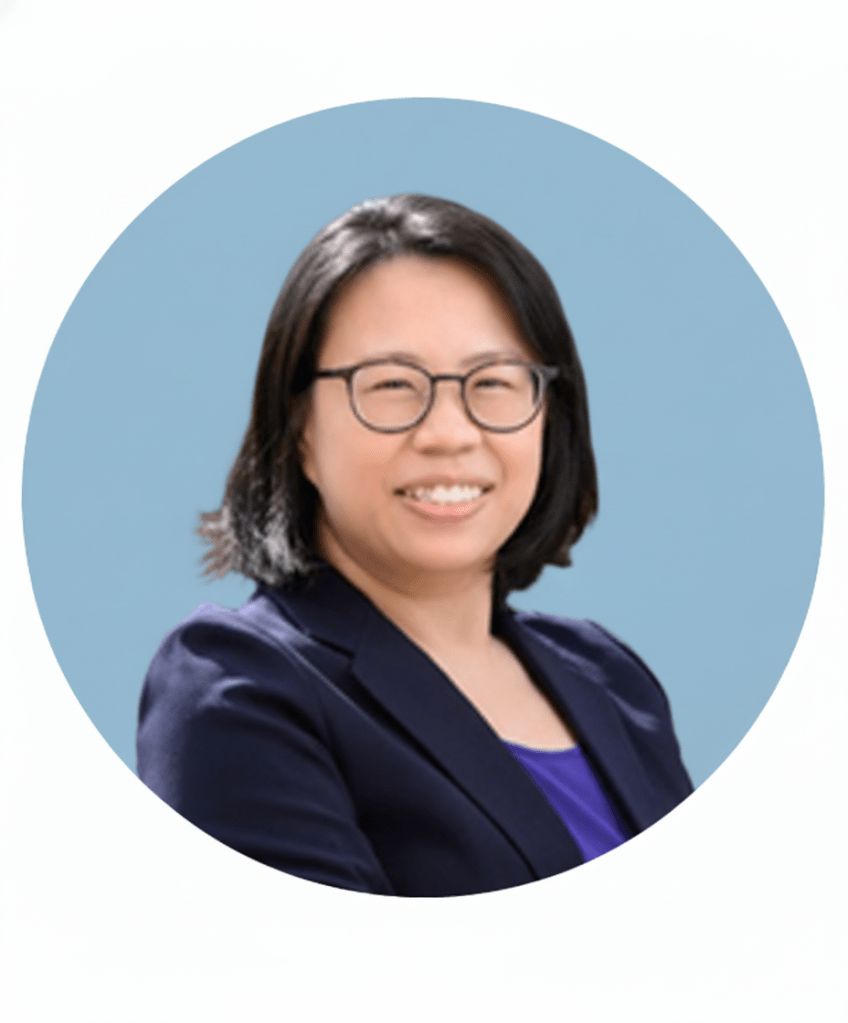

Dr. Glen Kua
Dr. Glen Kai Bin Kua obtained his Ph.D. from the National University of Singapore in 2023. His doctoral research focused on enzyme engineering and enzymatic biotransformation for the green synthesis of valuable amides. He is currently a Research Scientist at Wilmar International Limited, where his work centers on microbial strain development for the sustainable production of high-value compounds. His research interest lies at the intersection of biocatalysis, metabolic engineering, and industrial biotechnology, with an emphasis on advancing environmentally friendly bioprocesses.
Dr. Bingyin Peng
Dr. Bingyin Peng earned a PhD from the University of Queensland and works on microbial catalysis for sustainable biomanufacturing of bioingredients (including food, fuels, plastics, and pharmaceuticals) using metabolic engineering and synthetic biology. He developed haploinsufficiency-driven in vivo gene amplification technology, which supports gene copy number optimization in yeast and enables record-breaking production of heterologous terpenoids. He also developed the genome database (yeastlink.com) to facilitate genetic design in Yarrowia lipolytica and Komagataella phaffii. He has authored publications in Nature Communications, Nucleic Acids Research, and Trends in Biotechnology and is the lead inventor on a patent.


Dr. Balaji Balagurunathan
Dr. Balaji Balagurunathan is a Senior Scientist with a PhD in Biotechnology and a master’s in Chemical Engineering, specializing in Industrial Biotechnology R&D. Highly proficient in managing interdisciplinary research collaboration projects with both industry partners and Institutes of Higher Learning (IHLs), he excels in leading diverse scientific teams. His core research focuses on biotechnology solutions for the Food Industry, concentrating on alternative proteins (plant-based and microbial), the valorization of food and agro-industrial side streams, and full-cycle integrated bioprocess development—including strain optimization, fermentation, and downstream processing.
Prof. Andreas Lopata
Professor Andreas Lopata is a highly qualified global expert in food allergies, holding a PhD in Medical Sciences (University of Cape Town) alongside an MSc in Zoology and a BSc in Biochemistry. He is a Professor in Biochemistry at the Tropical Futures Institute, James Cook University (Singapore Campus), where he also leads the Molecular Allergy Research Laboratory in Australia. Prof. Lopata is globally recognized for the identification and characterization of allergenic proteins in fish and shellfish, leading to the registration of over 30 novel food allergens in the Asia-Pacific with the WHO/IUIS. His research focuses on Healthy Aging and Tropical Health, translating fundamental findings into innovative diagnostics and immunotherapeutics.

Organizers

Don’t Miss Out!
Discover how the synergy between food and energy biotechnology is poised to create a circular bioeconomy that is both resilient and restorative.
Registration is closed due to overwhelming responses.
 BioEnergy Society of Singapore